

Kratom: Why It's Showing Up More and Why the Military is Paying Attention
Kratom: Why It's Showing Up More and Why the Military is Paying Attention
By: Michelle Madden, LPC
Long before policies change, the patterns show up in real conversations and day-to-day experiences. A few years ago, it was prescription pain meds, then sleep aids, then alcohol quietly filling every gap those things left behind. And now, more and more, it's kratom.
It comes up casually, in side conversations and intake histories, in 'I don't really use drugs' explanations. Especially within active-duty military and recently separated service members, it's showing up often enough that leadership has started paying closer attention.
Why kratom doesn't register as 'a problem' at first
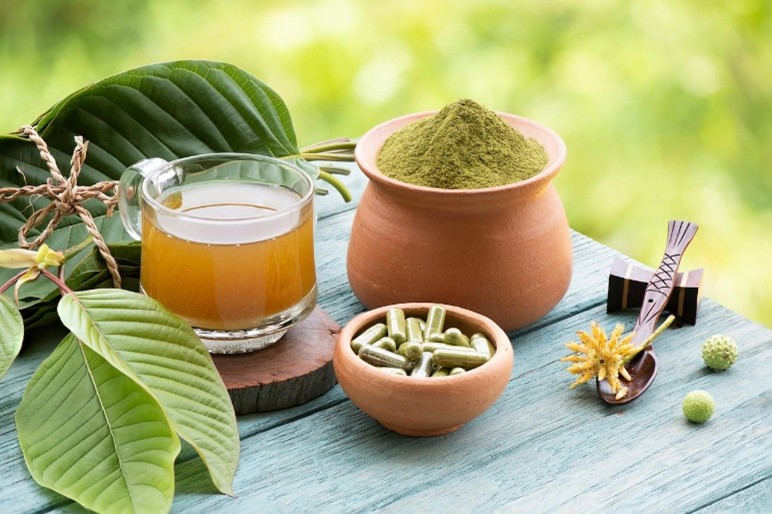 Kratom's rise has a lot to do with how it's perceived. It's often described as:
For people trained to manage risk and consequences, that framing matters. Kratom doesn't carry the same stigma as illicit drugs. It doesn't automatically trigger career-ending alarms. And in military environments, where alcohol is culturally normalized and controlled substances are heavily penalized, kratom can feel like a gray-area workaround. Until it isn't.
What kratom actually does and why that matters operationally.
Kratom is not a neutral substance. At lower amounts, it can feel stimulating: more energy, focus, or motivation. At higher amounts, it can shift toward sedating, opioid-like effects, including drowsiness, slowed reaction time, emotional blunting, and impaired judgment. That dose-dependent swing is part of the concern because unlike substances with predictable profiles, kratom's effects can vary widely based on:
From a readiness standpoint, that unpredictability matters.
Why the military is increasingly restricting and testing for kratom.
Across military branches, kratom has increasingly been identified as a prohibited or disallowed substance, even in places where it remains legal for civilians. Why? Not because it's 'natural.' Not because of optics.
But because of documented maladaptive side effects that interfere with duty performance and safety, including:
In environments where alertness, judgment, coordination, and reliability are non-negotiable, substances that unpredictably alter the central nervous system become a liability. That's why kratom is now showing up in command guidance, policy clarifications, and drug-testing discussions across branches. Not as a moral issue but as a readiness and safety issue.
The familiar logic trap: 'It's not alcohol or drugs.' This is where many people get stuck.
'I'm not drinking,' 'I'm not using opioids,' 'It's legal where I live,' but legality and suitability for service are not the same thing. The military doesn't evaluate substances based on whether they're sold at a gas station or online. It evaluates them based on:
And kratom has increasingly landed on the wrong side of those metrics.
Why it keeps showing up anyway
This isn't happening because people are reckless. It's happening because people are:
Kratom doesn't rise in isolation. It rises where needs are unmet. But when a substance starts requiring monitoring, restriction, and testing, that's usually a sign that the cost is outweighing the benefit.
This isn't about panic. It's about pattern recognition. We've seen this cycle before: substances that begin as tools, substances that feel manageable, substances that quietly become necessary. The military's increasing scrutiny of kratom isn't random; it's reactive to what's being observed in real-world performance, health outcomes, and command concerns. That alone should give pause.
A moment worth taking seriously
Kratom doesn't usually raise alarms right away. It tends to blend in; used quietly, justified easily, and rarely talked about unless there's a problem. However, when a substance starts drawing attention from military leadership, policy updates, and testing conversations, that's not random. It's a response to patterns being seen on the ground: changes in performance, reliability, mood, and judgment that matter in environments where margins are thin.
If kratom has become part of how you're managing pain, stress, sleep, or staying functional, it may be worth pausing and taking an honest look at what role, it's playing now, not when you first started using it, but today.
 You don't have to make assumptions or decisions in isolation. Talking it through with someone you trust, within your support system or with the Magnolia Meadows team, can help you sort out what's working, what isn't, and what could quietly cost you more than you intended.
Paying attention early isn't about overreacting. It's about staying ahead of something before it starts making decisions for you.
It comes up casually, in side conversations and intake histories, in 'I don't really use drugs' explanations. Especially within active-duty military and recently separated service members, it's showing up often enough that leadership has started paying closer attention.
Why kratom doesn't register as 'a problem' at first
Kratom's rise has a lot to do with how it's perceived. It's often described as:
- natural
- plant-based
- legal in many states
- 'not an opioid'
- 'not alcohol'
For people trained to manage risk and consequences, that framing matters. Kratom doesn't carry the same stigma as illicit drugs. It doesn't automatically trigger career-ending alarms. And in military environments, where alcohol is culturally normalized and controlled substances are heavily penalized, kratom can feel like a gray-area workaround. Until it isn't.
What kratom actually does and why that matters operationally.
Kratom is not a neutral substance. At lower amounts, it can feel stimulating: more energy, focus, or motivation. At higher amounts, it can shift toward sedating, opioid-like effects, including drowsiness, slowed reaction time, emotional blunting, and impaired judgment. That dose-dependent swing is part of the concern because unlike substances with predictable profiles, kratom's effects can vary widely based on:
- dose
- strain
- frequency of use
- individual physiology
- and what else is in the body
From a readiness standpoint, that unpredictability matters.
Why the military is increasingly restricting and testing for kratom.
Across military branches, kratom has increasingly been identified as a prohibited or disallowed substance, even in places where it remains legal for civilians. Why? Not because it's 'natural.' Not because of optics.
But because of documented maladaptive side effects that interfere with duty performance and safety, including:
- impaired cognition and reaction time
- sedation or excessive stimulation
- emotional dysregulation
- dependence patterns
- withdrawal-like symptoms
- and increased risk when combined with other substances
In environments where alertness, judgment, coordination, and reliability are non-negotiable, substances that unpredictably alter the central nervous system become a liability. That's why kratom is now showing up in command guidance, policy clarifications, and drug-testing discussions across branches. Not as a moral issue but as a readiness and safety issue.
The familiar logic trap: 'It's not alcohol or drugs.' This is where many people get stuck.
'I'm not drinking,' 'I'm not using opioids,' 'It's legal where I live,' but legality and suitability for service are not the same thing. The military doesn't evaluate substances based on whether they're sold at a gas station or online. It evaluates them based on:
- impact on performance
- impact on judgment
- impact on health
- impact on unit safety
And kratom has increasingly landed on the wrong side of those metrics.
Why it keeps showing up anyway
This isn't happening because people are reckless. It's happening because people are:
- dealing with chronic pain that doesn't meet prescription thresholds
- under slept from shift work or hypervigilance
- managing stress, irritability, or emotional numbness
- trying to stay functional without putting anything 'on record'
Kratom doesn't rise in isolation. It rises where needs are unmet. But when a substance starts requiring monitoring, restriction, and testing, that's usually a sign that the cost is outweighing the benefit.
This isn't about panic. It's about pattern recognition. We've seen this cycle before: substances that begin as tools, substances that feel manageable, substances that quietly become necessary. The military's increasing scrutiny of kratom isn't random; it's reactive to what's being observed in real-world performance, health outcomes, and command concerns. That alone should give pause.
A moment worth taking seriously
Kratom doesn't usually raise alarms right away. It tends to blend in; used quietly, justified easily, and rarely talked about unless there's a problem. However, when a substance starts drawing attention from military leadership, policy updates, and testing conversations, that's not random. It's a response to patterns being seen on the ground: changes in performance, reliability, mood, and judgment that matter in environments where margins are thin.
If kratom has become part of how you're managing pain, stress, sleep, or staying functional, it may be worth pausing and taking an honest look at what role, it's playing now, not when you first started using it, but today.
You don't have to make assumptions or decisions in isolation. Talking it through with someone you trust, within your support system or with the Magnolia Meadows team, can help you sort out what's working, what isn't, and what could quietly cost you more than you intended. Paying attention early isn't about overreacting. It's about staying ahead of something before it starts making decisions for you.
Magnolia Meadows Residential Treatment Facility provides Treatment exclusive for First Responders & Veterans battling Trauma, Mental Health Conditions and Co-Occurring Disorders, creating a healing atmosphere for recovery, and instill a confident hope that better days are ahead.
Reach out to learn more or speak with an admissions specialist.
855-644-7500
info@magnoliameadows.com